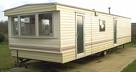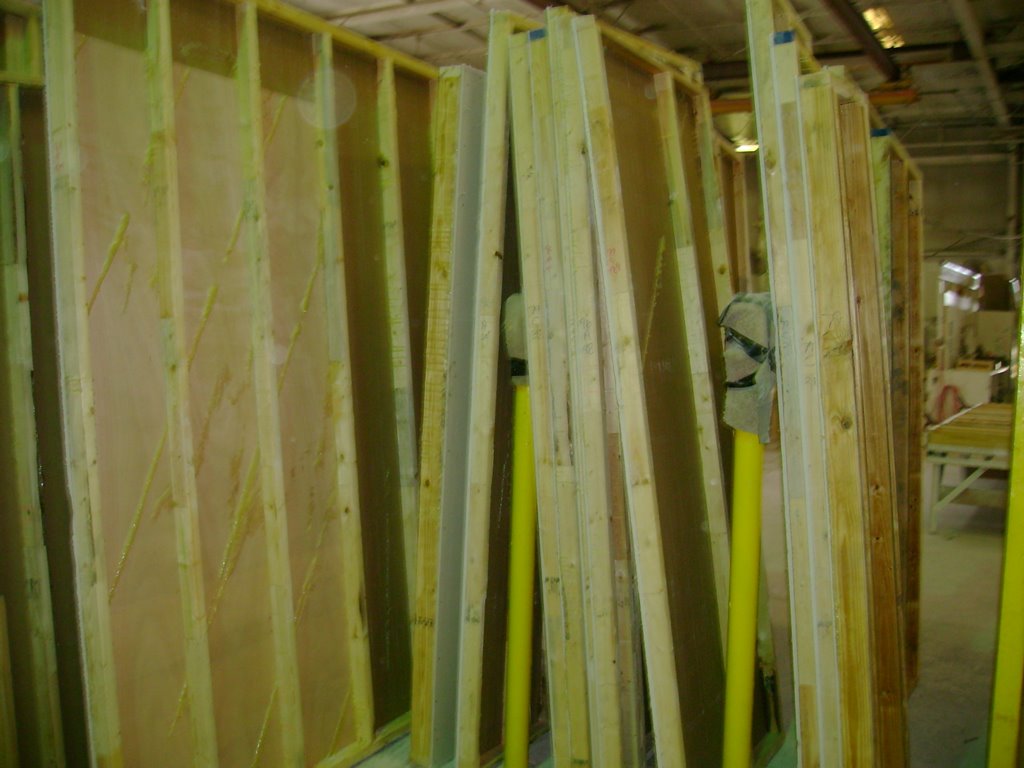
Click here to view a slideshow of photos from the Show Village.

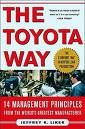
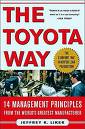
Summary: Chapter 11 of The Toyota Way discusses principle #5: build a culture of stopping to fix problems, to get quality right the first time. This principle, also known as jidoka, is a key pillar of Lean along with one-piece flow. Flow surfaces problems, and jidoka focuses everybody's attention on solving them. The result is improved efficiency and quality. Here are a couple of discussion topics:
1) There is a huge difference between Toyota's philosophy of stopping the line and that of most manufacturers. Honestly discuss Toyota's philosophy that "no problems is a problem" in light of our own practices.If you have any questions about the discussion topics, or if you would like to add a topic, leave a comment.
2) The principle of jidoka refers to the practice of building quality into machines (autonomation) and empowering humans to stop the line through the use of andons. Discuss how jidoka is or is not applicable to the manufactured housing industry.
3) Describe a typical andon system. Does it shut down the entire line? Does it require a technology investment? What is the purpose?
4) What does poka-yoke mean in English? What are some Toyota examples of poka-yoke?
5) Toyota posts standard work charts with visuals and detailed
notebooks with photos in the work area. Explain the role of standard work at
Toyota?
6) Describe Toyota's quality control system. What tools do they employ? Are they complicated? Who is responsible for quality?
7) Discuss how jidoka does or does not apply outside the factory.
8) Explain how one-piece flow and jidoka mutually reinforce each other.
Yesterday, I spent the entire day working with our 6S team on our improvement project. We began the day in a classroom where we did an orientation for the team members. First, our General Manager gave an overview of our Lean strategy for the entire factory, with a focus on the role of the 6S's. Then, I gave a quick training session on the 6S's and Lean (about 5 minutes in length). Next, our Safety Manager discussed each safety issue that is to be addressed as part of this 6S event. Then, we gave the team members folders that included: a hand-out detailing the 6S's, some rules of conduct, and a map of the frame shop area. We then went down to the shop floor and began planning: 1) Sort - We identified and red-tagged unneeded material. We just used red tape. Luckily, there was not a lot of material that needed to be removed.
2) Safety - We addressed the safety issues with the help of the maintenance department. Some items were handled immediately, and others were scheduled for completion during the two weeks leading up to the 6S event.
3) Set-In-Order - We planned how we would reorganize the storage of material to be more efficient. We decided to have well-marked assigned spaces for each type of material, along with standard labels that are easily visible to the material handlers. We also decided to move some material around to put it closer to the point of use. We made plans to reburbish the tool locker so that each tool would have its own clearly marked space.
4) Shine - We made a plan for cleaning and painting the entire area on the day of the event. We decided to add a metal plate to the wall in one area to protect it from repeated damage and discoloration due to the frame building process. We also made plans to refurbish a couple pieces of small equipment. Some of the large equipment will be refurbished during our annual renovation week in July when we have several days to do the work.
5) Standardize - We set aside one area of the department to be a "resource center" for the associates. This area will include a visual control board for 6S upkeep, a standard work folder, and visuals of key installations.
6) Sustain - We have a bulletin board that we will use to post before & after photos, results from cycle time improvements, and other positive information. Additionally, we are including every Team Leader and Supervisor in the plant on the day of the event. They will receive an orientation to the 6S's and will then participate all day in the frame shop. Hopefully, this will allow each of them to see the results from the event and give them some ideas for their own areas.
Here is an excerpt from an e-mail by Dewey Warden, Toyota-trained Lean Manager at Senco Products: ..I thought the symposium went very well. Many of the comments, discussions and questions I heard demonstrated a great amount of interest in moving forward with lean in the industry. I am sure that there are going to be some that may study it and do nothing. I also suspect that there are some who are going to try it but lose interest within a year or two. I predict however, that a good number of the companies that participated in the symposium and visited it are going to use lean for the long-term. I believe that these organizations will engrain lean into their culture. It will become the way that they “do things”. Those are the companies that are going to surpass their competitors, improve their safety, quality, productivity and their capabilities. I further predict that a few organizations will take up the greater challenge to set a goal that will focus their effort to match their information flow and their material flow to a make-to-order process from order to ship. They will excel. I know that it is hard to let go of the past. Many may wish for the old days of three to four week backlogs being necessary to run efficiently and effectively. Trust me. There is a great amount of waste that is available to be eliminated. It will stagger the mind as the true believers “learn to see” over the next two to three years of their implementing lean into their culture...As always, Dewey provides words of knowledge, reality, and encouragement. I agree 100% with his assessment. What are your thoughts?
Today, I spent some time collecting data in the frame shop in preparation for our meeting Monday. I mapped out the physical layout of the area including the location of materials and equipment. I'm going to get one of our CAD engineers to draw it up on the computer, and then we'll turn it into a spaghetti diagram that shows how people and material move around the area.
This is the first in a series of posts on our upcoming kaizen event, a "6S" of the frame shop in our 06 factory in Plant City, Florida. In this article, I'll give some background on the event and describe what's coming up soon. Then, I'll update the blog as we plan, execute, and follow-up on the event. I'll be sure to provide photos, spaghetti diagrams, cycle time data, and plenty of commentary. Now, let's get started with some preliminary information. 1) Sort - means to go through the area and determine what is needed for current production. Anything not needed is red-tagged and discarded in an orderly manner. It's a good idea to have a red-tag area designated in advance to house "quarantined" material/equipment/etc.Once the 6S's have been implemented, the operations should be able to operate more efficiently. The next step is to link your newly stabilized process with another stable process in a one-piece flow (for more on flow click here). If one-piece flow is not plausible, then a pull system is the next best thing (for more on pull systems click here). Once flow and/or pull have been achieved, then the process cell should be much more capable and powerful than it ever was before the improvements.
2) Safety - More important than anything else is the safety of the work area. Before determining the future layout of the area, take into account any existing safety hazards. Eliminate them, and do not build-in any safety hazards into the new layout. Clearly mark hazard zones, keep safety equipment in prime operating condition, fix any structural elements that are damaged, and so on.
3) Set-In-Order - Take what is left and put it in the right place. By right place, I mean the location that most reduces waste. Remember, excessive walking is waste, waiting is waste, damage is waste. Choose locations for materials/equipment/etc. that allow the opration to flow without delays. Label racks so that material is easily identified; delineate dumpster locations on the floor; move equipment closer together to reduce walking distances, use shadow figures to outline where handtools go; create open lines of sight. The 2nd S is your opportunity to get things right on your area layout.
4) Shine - Now that you have everything where you want it, it's time to get everything in top working condition. This means cleaning, repairing, refurbishing, and replacing everything in the area. The goal here is to set the standard that you would like to maintain for the long-haul.
5) Standardize - Once everything is looking the way you want it, it's time to lock it in with clear, visual procedures for maintaining the first 4 S's. By standardizing the upkeep of the area, you will ensure that the area doesn't slip back into old habits. Use visual control boards to communicate areas of responsibility. Make the team leader in an area be responsible for the follow-up on the assignments. Have the supervisor meet with the team leader regularly to go over issues and ideas.
6) Sustain - Create the conditions necessary to sustain the improvements for the long-term. Go back and check that the standard maintenance and cleaning requirements are being followed. Reward those who adhere to the spirit of the improvements. Post before & after photos of the area. Have a BBQ. Do whatever it takes to prevent regression and create dedication to orderliness.
1) Champion - the Production Manager of the 06 plantWe'll meet this coming Monday to do a quick orientation, and then we'll spend the rest of the day planning our event based on the ideas of the Captain and Team Members. It has to be their event, not the Champion's, and certainly not mine. Then, we'll spend two weeks getting things lined up for the event. The majority of the event itself will be performed over the course of one day. Then, we'll do some follow-up work and prepare a presentation to show our results. I'll keep you up-to-date as we go. Any questions, thoughts, suggestions, or comments are greatly appreciated.
2) Captain - the Supervisor of the frame shop
3) Team Members - the Team Leader of the frame shop, the Associates from the frame shop, and the Team Leaders from all of the other departments in the factory)
4) Lean Advocate - me, I'll provide technical assistance and logistical support
held in Austin, Texas. The event was organized by the Manufactured Housing Research Alliance (MHRA) in conjunction with the Manufactured Housing Institute's annual Winter Meeting. MHRA has been working with several manufactured housing factories for the past 9 months for a project entitled "Manufacturing Innovation Through Lean Production." Here's some background on the project: In April, delegates from each factory attended a week-long training session in Cincinnati to learn the basics of Lean. Then, we took this knowledge back to our factories and began the long journey of implementing it. Dewey Warden from Senco (a supplier to our industry) and Dr. Mike Mullens from the University of Central Florida worked hands-on with the factories mapping out our value-streams, performing Rapid Process Improvement (RPI) events, and working with management on implementation strategy. This occurred over the course of about 9 months, and is still happening today. Finally, all of the project participants came together in Austin this week to discuss what we had learned during the course of our project. That's the project in a nutshell.Now that that's out of the way, I'd like to give you some of my notes from the symposium:
1) It was great to see good ol' factory guys up on stage, speaking candidly, using PowerPoint, answering questions from the audience, and pretty much enjoying the moment. Also, there seemed to be a genuine appreciation of their effort from the audience.Overall, it was a great experience. I came away feeling that more and more people are picking up on what we're trying to do, and that Lean can be used as a marketing tool in our industry. If people start to associate factory homebulding with Lean, then maybe the stigma of trailer parks
2) Every presentation made the point that there has to be buy-in from all levels for Lean to work. It can't be top down only, and it can't be shopfloor only. Everybody has to get involved in the decision-making process. It was emphasized that one of the difficulties that we've faced was the need for old school authoritarian types to let go of the reins for a minute and let the front-line guys do the driving.
3) There seems to be a consesus by everyone that Lean factory homebuilding has the potential to be the best solution to fulfilling housing needs. Dr. Darlene Williams, the Assistant Secretary of the U.S. Department of Housing & Urban Development, spoke at the outset of the symposium, and indicated that her organization was committed to supporting Lean research in our industry. It was very encouraging.
4) It still amazes me that so many competitors can come together and share ideas, secrets, strategies, and experiences with each other even as the market has become more and more competitive. The idea is that we're entering a new phase in the history of homebuilding, and that we'll all have opportunities to make a difference. It's nice to see such cooperation and goodwill in the corporate world.
5) It's obvious that we have a long way to go before we can say that we know Lean. Some executives have a good comprehension of macro-level principles, and some factory guys have a solid grasp of micro-level techniques, but only a very few people have an understanding of the entire spectrum of Lean the way a Toyota sensei would. Don't get me wrong, it's not rocket science, but there are always deeper levels of undestanding that can and must be attained to become like Toyota.
and hurricanes will be replaced by a mental association with top-of-the-line manufacturing
products, like say, the Lexus automobile. Of course, this correlation will never make headway until we make some headway into actually becoming lean. We've got a long row to hoe, but the journey should be enlightening.
Think about building and setting interior walls. The framers and drywall hangers might work for the wall department, but the wall-setters might work for another department (different team leader, different supervisor, different priorities). At best, the wall department leadership could link the framing and drywall hanging operations into one continuous process flow, but they might have problems integrating with the wall-set operation. That sort of departmental boundary-crossing requires management's involvement, to either change the boundaries or to build consensus between the two departments.
Chapter 8 of The Toyota Way focuses on Principle #2: Create continuous process flow to bring problems to the surface. This is the first of 7 principles that comprise the Process portion of the 4Ps. Dr. Liker begins this chapter with a quote from Teruyuki Minoura, former President, Toyota Motor Manufacturing, North America: "If some problem occurs in one-piece flow manufacturing then the whole production line stops. In this sense it is a very bad system of manufacturing. But when production stops everyone is forced to solve the problem immediately. So team members have to think, and through thinking team members grow and become better team members and people."The author then goes into great detail about the huge amount of waste that exists in most processes, and elaborates on the eight types of process waste:
1) overproductionOverproduction leads to piles of inventory that has to be stored, moved, re-moved, worked around, and damaged. Flow reduces the amount of inventory in the system, thus eliminating or reducing the other types of waste. This leaves you with a lean process. Dr. Liker uses a great analogy to describe the value of flow:

2) waiting
3) unnecessary transport
4) overprocessing
5) excess inventory
6) unnecessary movement
7) defects
8) unused employee creativity
Next, the chapter discusses traditional mass production thinking, whereby people and equipment are grouped together into separate departments. The theory is that groups of similarly skilled people will be able to squeeze a little bit of extra efficiency out of their operation through economies of scale. However, this type of organization creates the need for special departments to coordinate the actions of all of the disconnected operations. Large batches are the norm in this type of environment, due to the need to maximize the efficiency of each department. This overproduction leads to inventory and all of its associated waste. Additionally, defects can be hidden in the big piles of inventory, and nobody will know until a whole big batch has already been produced. Dr. Liker says:"A lean expression is that lowering the 'water level' of inventory exposes problems (like rocks in the water) and you have to deal with the problems or sink."
"The reality is that in a large batch operation there are probably weeks of work in process between operations and it can take weeks or even months from the time a defect was caused until it is discovered. By then the trail of cause and effect is cold, making it nearly impossible to track down and identify why the defect occurred."This echoes the quote from the beginning of the chapter about how a lean process with very few inventory buffers makes people think and improve. This is the true power of flow.

The author then briefly covers "takt time: the heart beat of one-piece flow." Takt is German for rhythm or meter, and in Lean refers to the rate of customer demand. Dr. Liker includes this section here because producing based on takt time is one of the keys to achieving flow. If you're producing at the same rate customers are ordering, then you prevent overproduction, which leads to inventory and all of its associated wastes.1) builds in qualityAll of these benefits are very advantageous, but the real power behind one-piece flow is the fact that to make it work, everybody has to become a thinker and a problem-solver.
2) creates real flexibility
3) creates higher productivity
4) frees up floor space
5) improves safety
6) improves morale
7) reduces cost of inventory
"When you link operations together in a one-piece flow, your entire cell goes down if any one piece of equipment fails. You sink or swim together as a unit."The author goes on to say:
"Many companies I have visited make one of two mistakes when implementing flow. The first is that they set up fake flow. The second is that they go backwards from flow as soon as problems occur."While it's obviously difficult to convert from batch production to one-piece flow, it's even harder to argue with its benefits. Providing product faster, with less lead time, greater variety, and higher quality, while at the same time providing a more empowering and safer work environment for employess, is truly a remarkable achievement. All it takes is an awareness of what waste is, and how to eliminate it continuously.